2025
Exposing Secure Coding Vulnerabilities with a Custom Static Analysis Tool
A custom regex-based static scanner for C and C++ codebases that detects CWE-classified vulnerabilities in seconds, benchmarked against Coverity Scan on the Neovim repository.
With Tom Schollenberger·Samrudhi Ravindra Yadgude
The Problem
Large open-source C and C++ projects suffer from recurring security vulnerabilities — buffer overflows, null pointer dereferences, format string bugs, and unsafe function calls — even in actively maintained codebases with established code review processes. Enterprise tools like Coverity Scan catch these issues but require full build integration and can take hours to run, making them impractical for rapid feedback during development.
What We Built
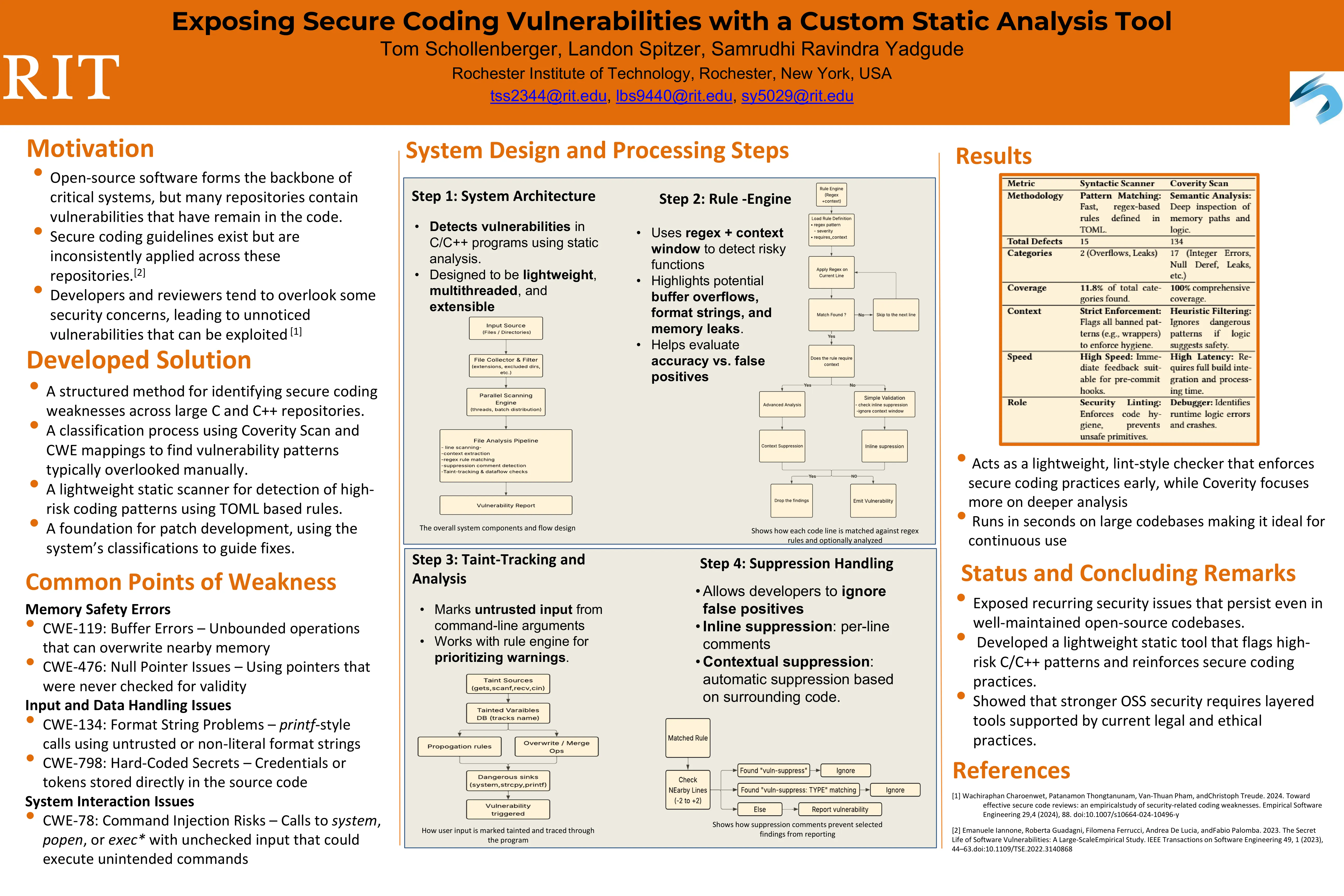
A lightweight, configuration-driven static scanner written in C++ that detects high-risk coding patterns in seconds. Vulnerability rules are defined in external TOML files rather than hardcoded logic, making the scanner fully extensible without recompiling.
Key design decisions:
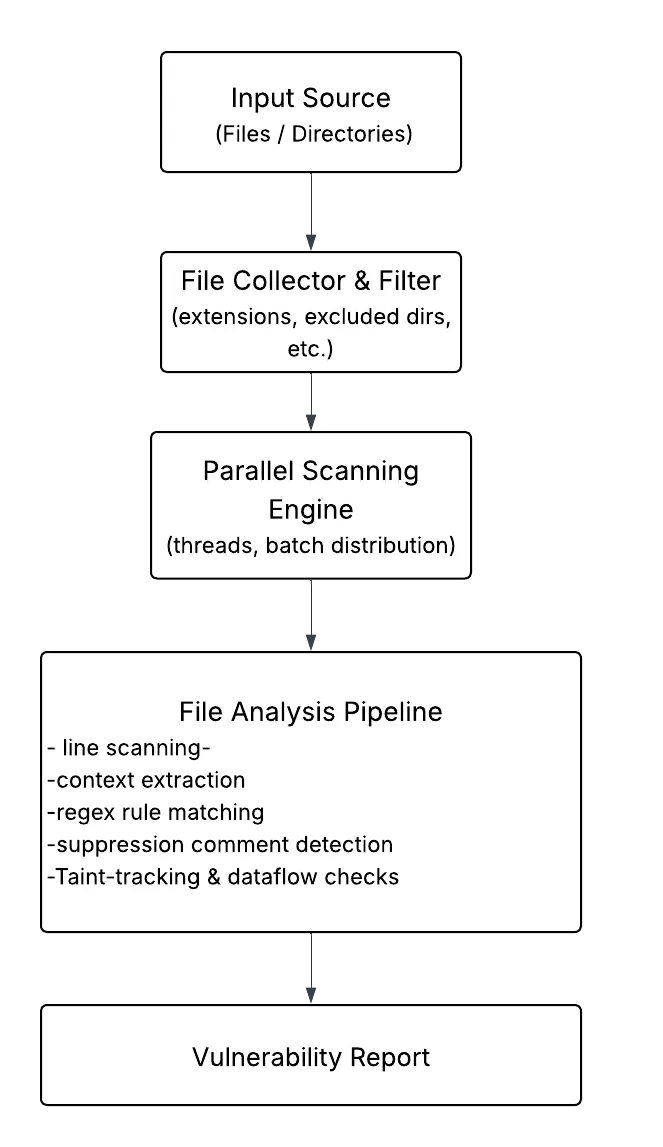
- Rule-based regex engine — each rule encodes a CWE identifier, severity level, description, one or more regex patterns, and a remediation recommendation; the C++ engine is a generic runner over those rules
- C++17 filesystem traversal — recursively discovers
.c,.cpp, and.hfiles, with configurable exclusion lists for build directories and third-party code - Comment-aware matching — skips
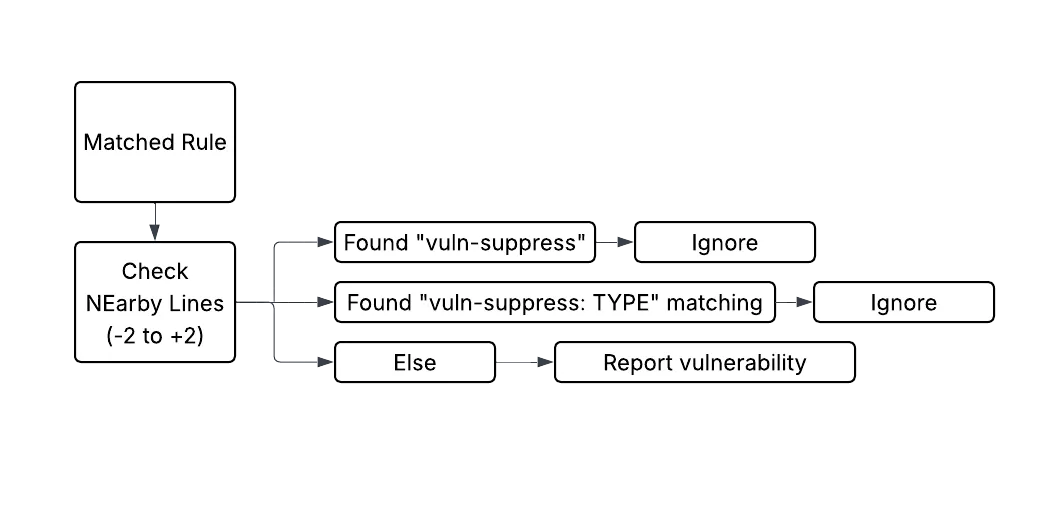
//line comments and tracks/* */block boundaries to suppress false positives on commented-out code - TOML extensibility — new vulnerability classes can be added by dropping a new rule file; no code changes required
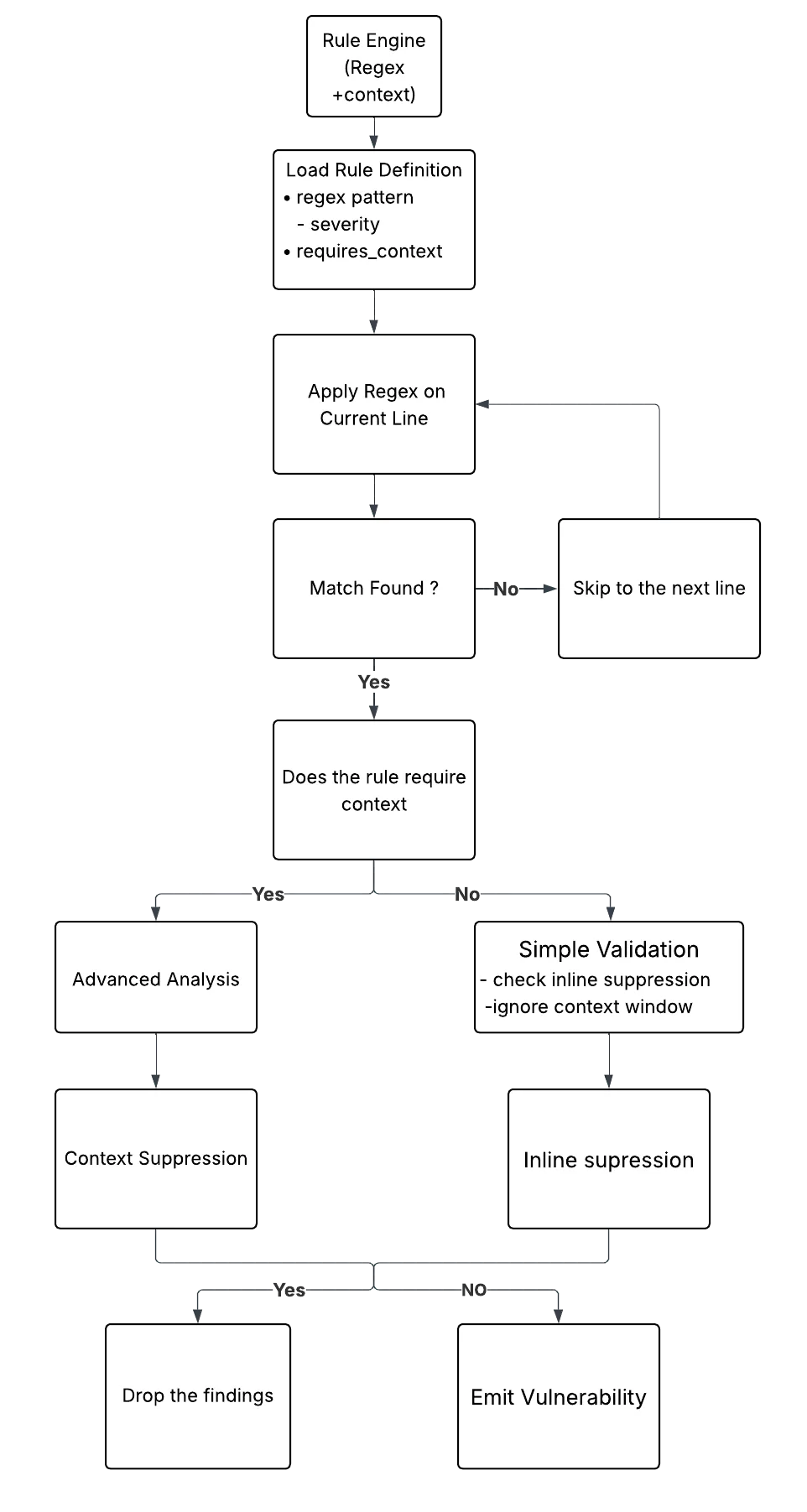
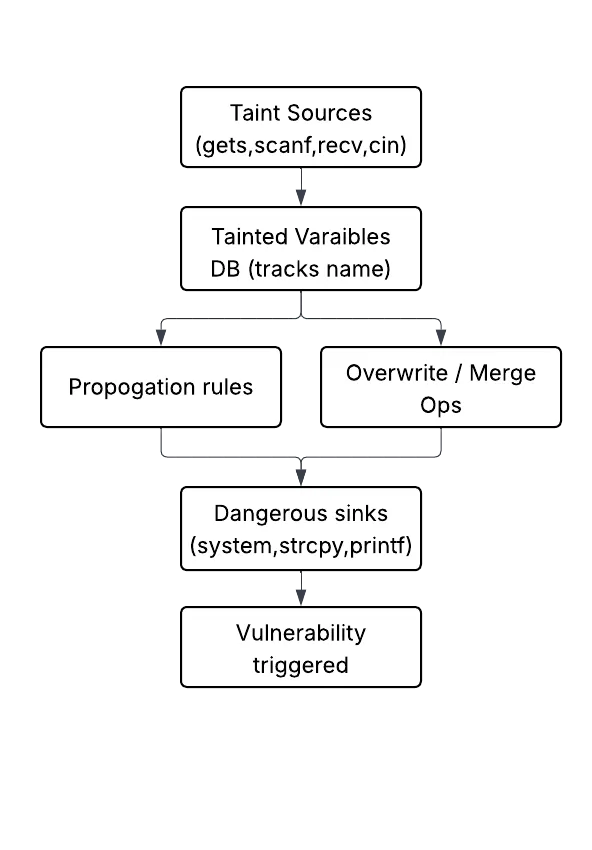
Vulnerability classes covered: CWE-119 (buffer overflows via unbounded strcpy/gets), CWE-134 (format string misuse), CWE-78 (command injection via system/popen/exec*), CWE-476 (null pointer dereference), and CWE-798 (hard-coded credentials).
Results
We benchmarked our scanner against Coverity Scan on the Neovim repository — a large, actively maintained C codebase:
| Metric | Our Scanner | Coverity Scan |
|---|---|---|
| Methodology | Regex pattern matching | Deep semantic analysis |
| Total defects found | 15 | 134 |
| Vulnerability categories | 2 | 17 |
| Speed | Seconds (pre-commit viable) | Hours (full build required) |
| Role | Security linting / code hygiene | Deep runtime logic analysis |
The tools are complementary, not competing. Our scanner runs fast enough for pre-commit hooks and enforces hygiene around banned function usage immediately. Coverity runs periodically for deeper semantic analysis. Together they form a layered detection pipeline — we found critical vulnerabilities in Neovim that remain unpatched, demonstrating that even well-reviewed projects miss issues that systematic tooling catches.